
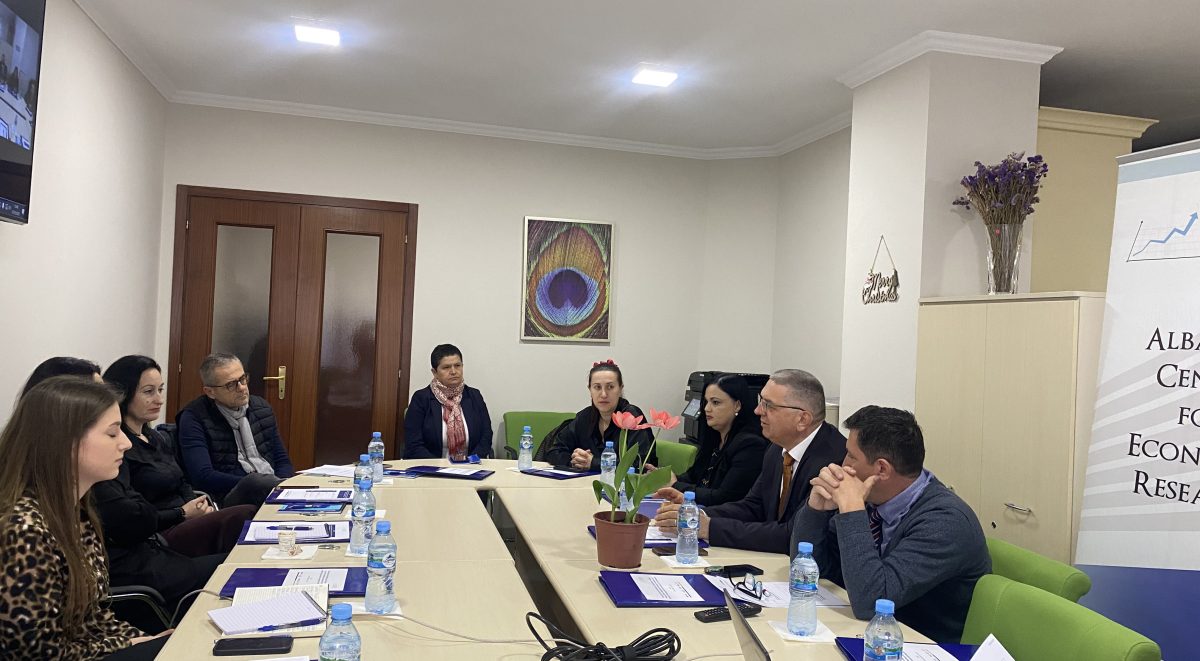
On March 27, the Albanian Center for Economic Research (ACER) organized a meeting to establish local-level monitoring forums for Public-Private Partnership (PPP) projects. The meeting brought together 13 experts from civil society, public institutions, and local authorities. The session extended beyond its planned duration due to active discussions, where participants agreed on the potential benefits of such a forum for enhancing PPP effectiveness and transparency
Key points included:
-
Challenges in PPPs: Experts discussed issues like the lack of performance indicators, absence of effectiveness reports, and the negative impact of current PPP implementation on public interest. There was general consensus that, with commitment, successful PPP projects could improve transparency.
-
Need for a Forum: The forum would provide a platform for dialogue, exchanging ideas, best practices, and local models to strengthen PPP governance at the local level.
-
Expert Insights:
-
Ina Zeqaj (Ministry of Finance) focused on the ongoing review of Albania’s PPP and Concession Law, noting the expected completion by December 2025. She highlighted that the law does not fully align with EU standards and requires adjustments, especially regarding budget laws. Ina emphasized the need for increased accountability in PPP projects, a recommendation from the IMF, and stressed that delays in procedures often lead to non-compliance with deadlines. Additionally, she pointed out that project durations in Albania were unusually long compared to other Balkan countries, with some lasting up to 30 years.
-
Ardian Hackaj (CDI) acknowledged the challenges PPPs present, including opportunities for corruption and mismanagement, particularly when state control is excessive. He emphasized the importance of a well-designed PPP, effective implementation, and continuous monitoring for success. Ardian argued that the success of PPPs is not solely dependent on external methods but on how the projects are structured from the outset. He also raised concerns about the state’s assumption of too much risk in PPPs in Albania, calling for greater transparency and legal alignment with effective international models.
-
Zef Preci (Moderator) asked critical questions about local councils’ roles in PPPs, noting that municipalities, such as Tirana, have opted not to pursue any concession deals, while others, like Kamza, successfully terminated non-functional PPPs without arbitration. Zef’s insights underscored the need for municipalities to have greater autonomy in managing PPPs and emphasized the value of local-level governance in ensuring project success.
-
Agron Haxhimali (Institute for Albanian Municipalities) expressed strong support for the creation of a PPP monitoring forum, recognizing the necessity for education, awareness, and capacity building at the local level. He shared an example of a Smart Cities PPP project initially planned for Albania but stalled due to the complexity of procedures and lack of municipal capacity to handle them. Agron pointed out the strong influence of the government in limiting municipalities’ ability to act independently, emphasizing that such forums could provide essential guidance to overcome these barriers.
-
-
Legal Framework & Issues: Discussions covered the ongoing review of Albania’s PPP and Concession Law, with a focus on aligning it with EU standards and addressing delays in project implementation.
-
Capacity Building: Recommendations included organizing regional roundtables and forming focused groups to improve training on PPPs, as there had been minimal training by the Albanian School of Public Administration (ASPA) between 2019 and 2024.
The meeting concluded with broad support for establishing an open forum for collaboration and mutual learning, although no formal agreements were made.
Photos during the Forum


 SQ
SQ  EN
EN