
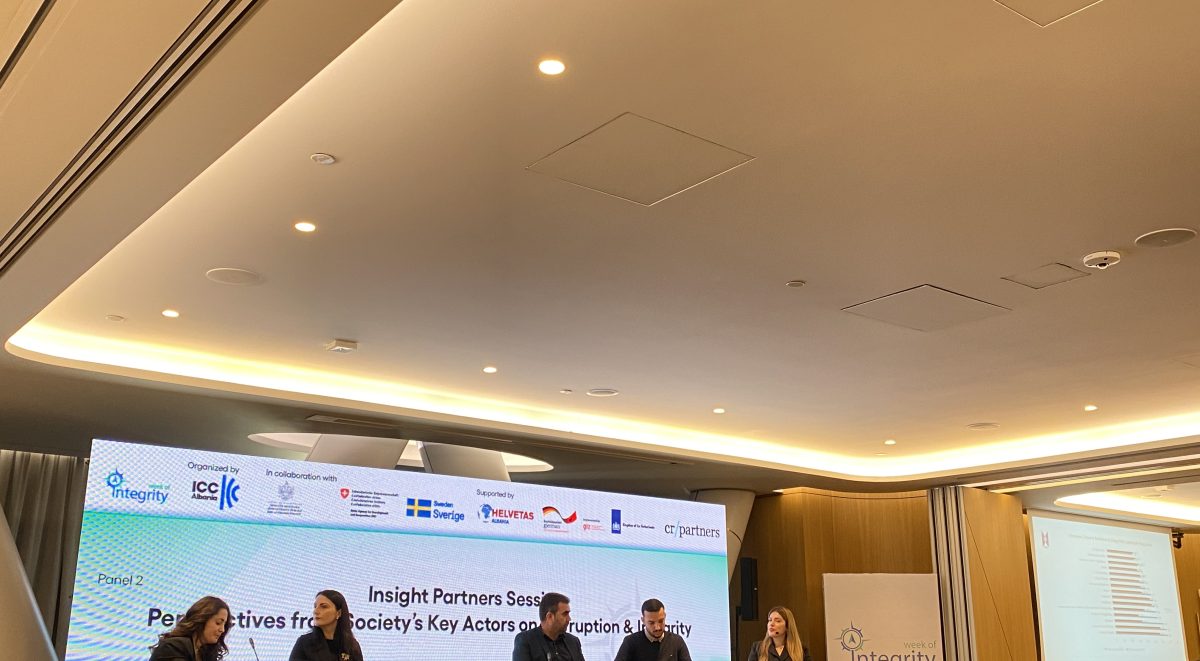
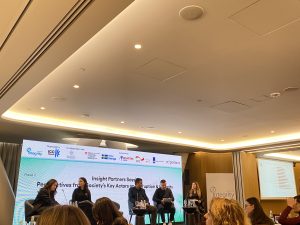
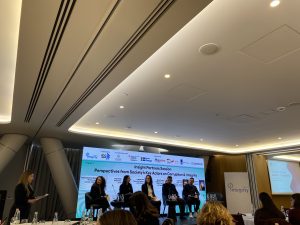
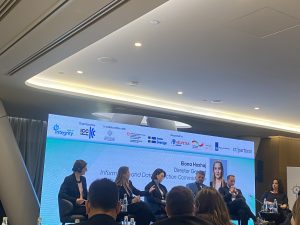
ACER participated in the 7th Annual Conference of the Week of Integrity, organized by ICC Albania, MAPA, the Bashki të Forta project of SDC, the Government of Sweden (Helvetas), GIZ Albania, the Embassy of the Kingdom of the Netherlands, and CR Partners.
During the conference, we presented the findings of the 2025 survey, conducted using the Corruption Monitoring System (CMS) methodology, which has been applied over the years in nine Southeast European countries within the @SELDI.netnetwork.
Key findings for Albania (2025):
• Experience with corruption:
Pressure to give bribes increased from 52.1% (2023) to 53.9% (2025).
Involvement in corruption rose significantly: from 40% to 50%.
– About 26.4% of citizens who paid a bribe did so under pressure.
• Attitudes toward corruption:
82% of respondents do not accept corruption as a practice (up from 65% in 2023).
48% show an indifferent attitude toward corruption, while 40% are sensitive to it a slight improvement in civic culture.
• Perceptions of corruption:
Judges, prosecutors, customs officials, and university professors are perceived as the most corrupt groups.
Perceptions of corruption decreased from an average of 3.4 to 2.6, indicating the impact of justice system reforms.
Confidence that “corruption can be significantly reduced” increased slightly (76%), but skepticism is also rising: more citizens believe that corruption cannot be fully eradicated.
These results indicate that citizens are showing greater resistance to corruption, but institutions still have a long way to go to meet public expectations.
 SQ
SQ  EN
EN